

Workplace Consultancy helps its clients by collecting extensive data on existing and selected office workplaces - from a technical, economic and organizational perspective - preparing analyses and quantifying the needs of those affected based on international methodology.
Taking this data into account, they make individual recommendations for the necessary office functions, their proportions, placement, and appearance.
Difficult terrain
Previously, it was sufficient to deal with the office before the lease contract expired or during major organizational changes. However, today it has become essential to continuous change trackingIn addition to the radical change in working habits, the recent drastic increase in operating costs has forced some companies to temporarily close areas or return them permanently to the landlord.
Lease agreements are still generally 5-year commitments, meaning that the rent and operating costs are long-term, fixed costs. That is why it is important to consider the technical features of the office building when choosing a location! In addition, when dreaming up interior design plans, it is worth considering the increased construction costs and time these days.
The changed external circumstances make it even more necessary to conduct a complex office usage analysis prior to moving, office design or renovation, and to provide the most accurate specifications possible for the design. This ensures that companies only spend on what they really need!
Cost-effective office
Whether a business needs to maintain an office at all depends on the size of the company, its activities and its organizational culture. It is more common to use rental properties instead of owning your own property. In such cases, we can calculate with a simplified formula office-related costs: rental fee plus development and operating costs.
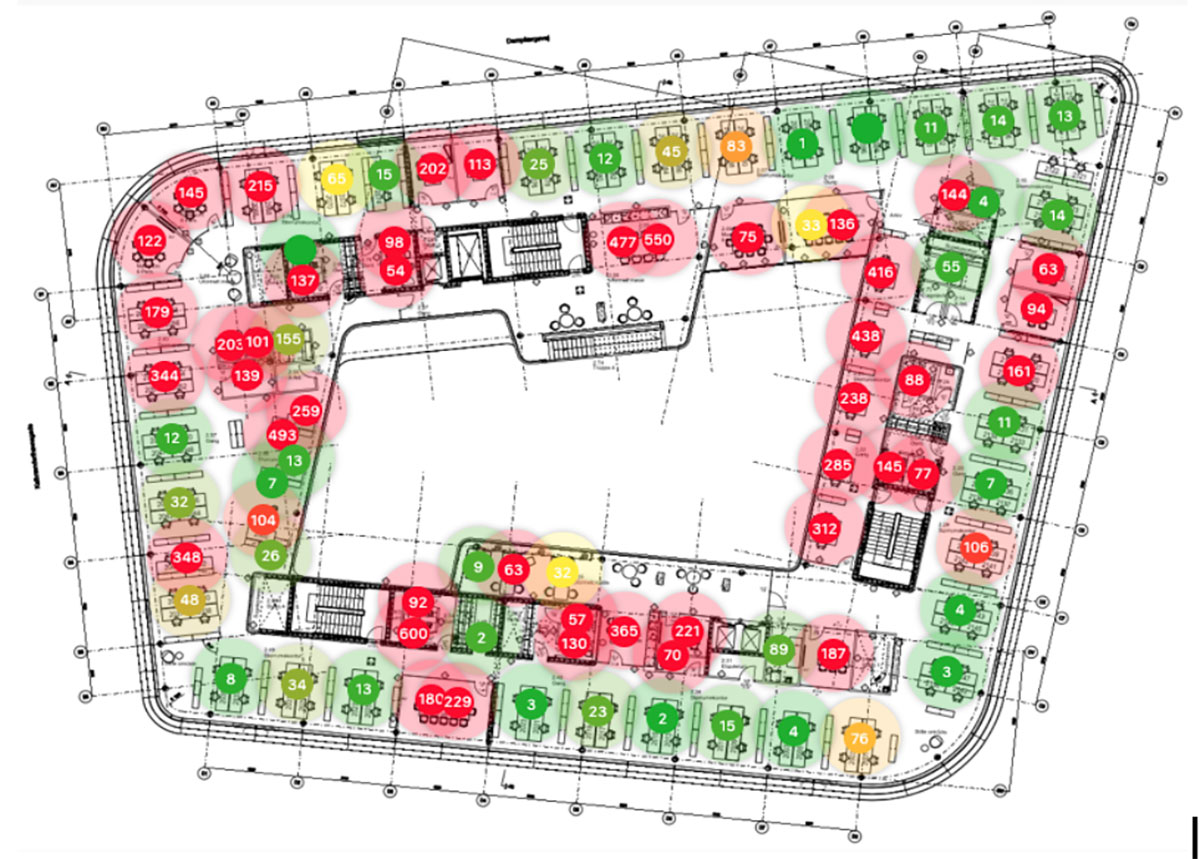
The rent largely depends on the size of the rented space. In order to avoid paying unnecessarily for an office that is larger than necessary, it is good to have real data on the utilization of the available space. With our sensor measurements, we can produce up-to-date reports on this.
The following members of the formula the development costs. Our professional recommendations include several options that meet the needs of the given company, but implement them in different ways. A common topic, for example, is whether managers should have their own office with a small meeting area, or whether they should be accommodated in open spaces with shared meeting rooms. In such cases, in addition to the number of managers involved and the required space requirements, it is also worth considering what additional costs would be incurred by implementing separate management rooms.
The third element of office-related costs is budget allocated for operation, some of which can be saved in smart office buildings. Using our sensor measuring devices, we can not only identify presence and measure occupancy, but also many other physical parameters (e.g. heat, light, CO2 level). Using this data, the technical systems of more modern office buildings are able to learn behavioral habits, i.e. over time, they cool, heat, and light where and when presence is more frequent. This can achieve demonstrable savings.
Office occupancy – feeling vs. measurement
In addition to changing working habits, office occupancy has become a prominent topic. We often hear from clients that their offices feel empty. However, it would be irresponsible for a manager to embark on an office transformation project based on such subjective feelings. Since the pandemic, companies have been trying many methods to quantify real occupancy data. The most common solution is access control system However, in addition to affecting GDPR issues, it does not provide information about what work activity the person arriving at the office is doing and in which part of the building. It only informs us about the time of entry and exit.
These missing inputs were initially only considered in our analyses. with questionnaire survey replaced, which has greatly nuanced the office usage habits and the necessary functions and spaces, but its clear weakness is that it is based on individual declarations. Although we can draw conclusions about the behavioral habits of different groups, these are estimated data rather than real pictures of the utilization of offices.
However, since we consider it crucial to clearly see who uses the office, for what purpose, and with what frequency, instrumental measurements We voted in favor of it. Some phone applications could also help us, but we encounter additional measurement difficulties with these programs. The fact that not everyone (guests, customers) necessarily uses the application, or that an internet connection is required to use it, causes inaccuracy, and it also raises the issue of personal rights that colleagues can be “tracked” on an individual level.
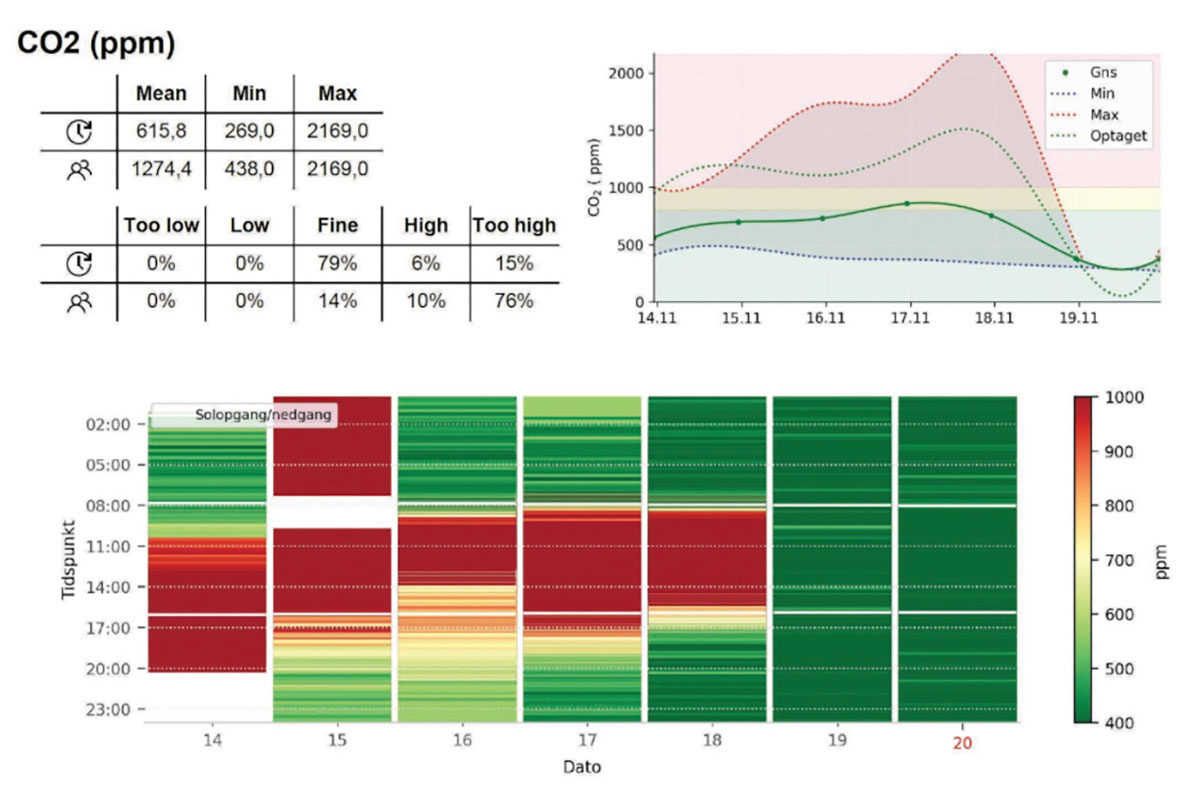
This is how we got to the point where We use sensor measuring devices in our office usage analysesThey are extremely easy to install, operate on an IoT basis and provide continuous data not only on occupancy, but also on other conditions of the workspace (air, light, temperature).
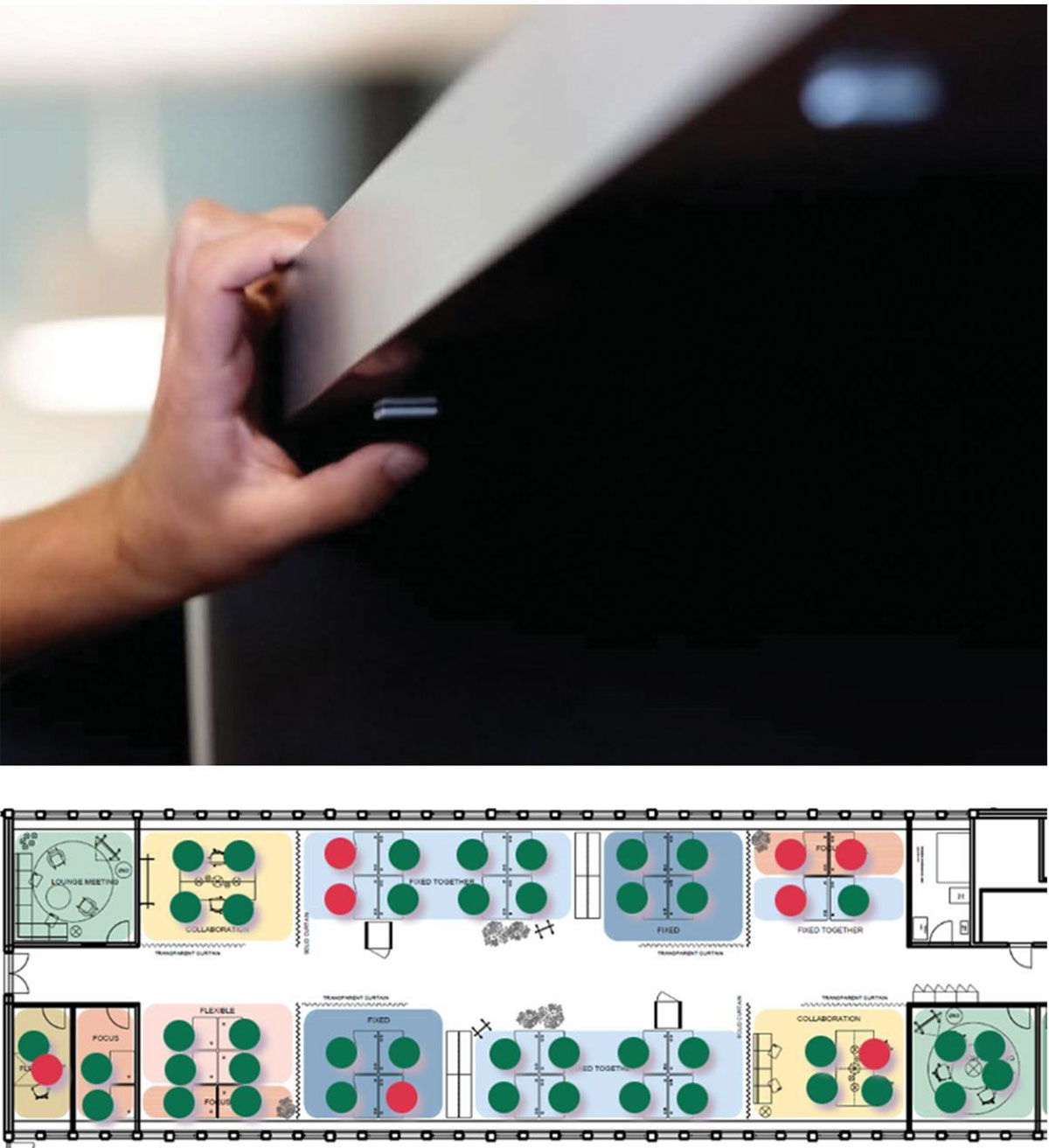
The sensor measurements we get a picture using current office occupancy.
The questionnaire surveys and they provide information on about the needs of stakeholders regarding workspaces.
Both methods provide quantifiable data, which complement each other and provide support for the design of the ideal, cost-effective office.
Our surveys show that employees are increasingly less able to be treated as a uniformed, unified team. It used to be clear that if someone worked in an office job, they had to spend every day of the week between 9 am and 5 pm in a mostly open office environment. Today, people are increasingly looking for an employer that takes their individual needs (e.g., accessibility, sick family members) into account. (See more at We prepared our case study at Deutsche Telekom.)
To get a more detailed picture of where, in what environment, and under what conditions our colleagues can work effectively, a detailed questionnaire survey covering everyone These help, for example, to quantify the resistance to the transition to a shared desk system and to identify the affected employee groups.
Employer branding is playing an increasingly important role in the labor market competition between companies, one of the building blocks of which can be a work environment that matches both organizational and individual needs.
Statements from data sets
During the complex office usage analysis, we collect data using the above methods, then analyze it, and, supplemented with other soft information obtained during interviews, we make suggestions on how to optimize the workspaces for our clients.
If we have piqued your interest, please contact us!