

In part 4 of our article series, we have collected the most important change management tasks that are now essential for a successful office transformation project.

The mutual influence of an organization and its work environment
Every change made in the work environment (such as a move or a switch to a shared desk system) has an impact on the operation of the organization concerned, and even on the organizational culture itself. This effect is also true in reverse: every change related to work must sooner or later have an impact on the physical environment. That is why we consider it important that the our projects are accompanied by an expert experienced in organizational changes.

At first, it may seem like an exaggeration to suggest developing a change management strategy when we “only” want to transform the office in accordance with the changed office usage habits. However, at the very beginning of the project, when we appear in the building – and take photos with floor plans in hand – the employees ask who we are and what our purpose is. Lack of communication creates uncertainty and later even mistrust, which greatly complicates a successful transformation project. For example, during a site visit, we found ourselves in an unpleasant situation when a personal acquaintance of one of us – as an employee of the client – asked us if we were familiar with their office.

That is, already You should establish the main milestones of your change management strategy at the very beginning of the project.. The complex office usage analyses used in our office usage questionnaire covering all employees not only an opportunity to obtain information for the newly designed office, but also a tool for change management. By involving employees, we can increase trust, understanding, cooperation, and even commitment to change! It is not uncommon for employees to indicate in the free-form sections of the questionnaire survey how grateful they are that management is interested in their opinions.
IMPORTANT! The satisfaction of colleagues can be increased by the fact that management is interested in the honest opinions of employees, meaning that conducting the survey in itself is a factor that strengthens trust.
BUT! If no change occurs after the survey based on the feedback received, the assessment of the survey and management may be lower than before the survey due to disappointment!
The importance of communication in change management
Instead of presenting different change management models in detail, we would rather draw attention to the essential minimum of change management: timely communication!
We recommend awareness and planning ahead. That is, considering what information, when, through what channels and to whom we will provide in order to ensure that, for example, a move goes as smoothly as possible. If in our previously mentioned example, our acquaintance had information that the company's lease contract in the given office building was about to expire, in connection with which the possibilities of the current office as well as some moving options were being assessed, then by meeting us in the office, our acquaintance could have confirmed that the project had started. (And perhaps even that, thanks to our acquaintance, the project was in good hands 😊) However, the lack of information creates uncertainty, and let's not even talk about possible fabrications!

During an office transformation project, it is worth giving status to the stakeholders several times, which also includes discussing the benefits of the change at both the company and individual levels. This becomes particularly important where there is a high level of satisfaction with the existing office, as this is when greater resistance can be expected.
In addition, it is beneficial if information channels are not only one-way, but also We also provide employees with the opportunity to provide feedback.. One form of this is a focus group discussion with opinion leaders. Very often, employees come up with creative or company-specific solutions regarding the usability of the office, or we can entrust them with tasks such as naming meeting rooms. For example, during one such focus group, the need was expressed that there should not be too much difference between the circumstances of office workers and blue-collar employees. This should not cause internal tensions between colleagues.
During a workshop with employees of a financial institution client, they shared with us that their main competitor had replaced larger desks with smaller ones overnight, so that even the workspace per person became uncomfortable. If we were not aware of these negative feelings towards such changes, we would most likely encounter complete resistance. By finding out about this in time, we were able to handle it.
For the above reasons, we usually invite the person responsible for internal communications of our clients to be among the project members. Together with him, we can effectively prepare managers for questions and concerns from employees, for which we think through reassuring answers in advance.
Office usage guidelines
At the end of the project, we prepare a management summary for management and feedback for employees from the detailed complex office usage analysis materials. We also discuss these with the participants in the form of presentations and workshops.
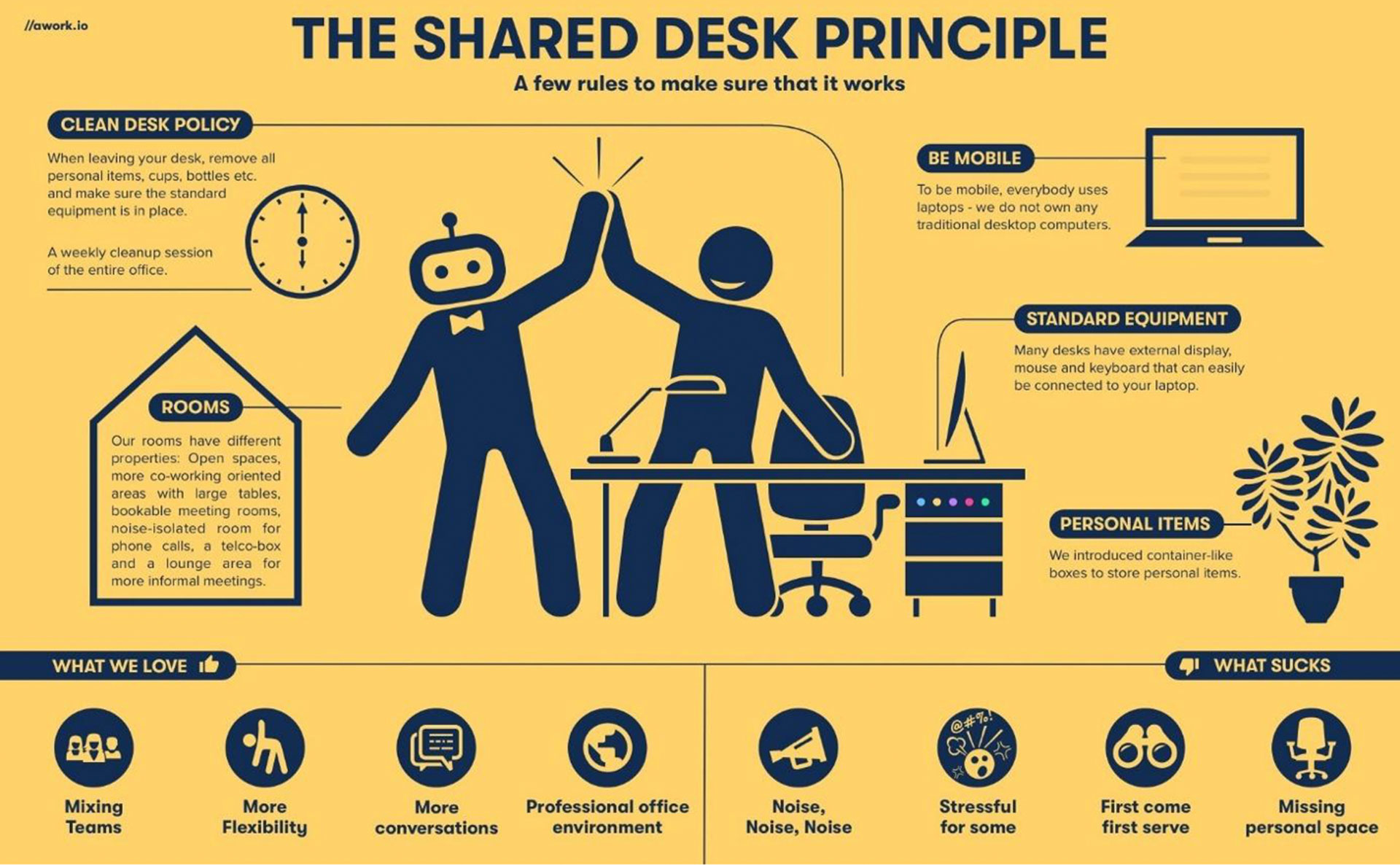
We compile an office use manual that helps office workers define, for example, the rules for using communal spaces. We also recommend pictogram guides or video presentation materials for these. For example, at a previous client, the use of a space called a “chill out room” caused disagreements: Some people wanted to use it to relax, while others were alone on their personal phones, or several people sat in to chat, which disturbed each other. Nowadays Switching to shared desk Because of this, employees almost everywhere need increased guidance on the correct use of the office.
Change is eternal.
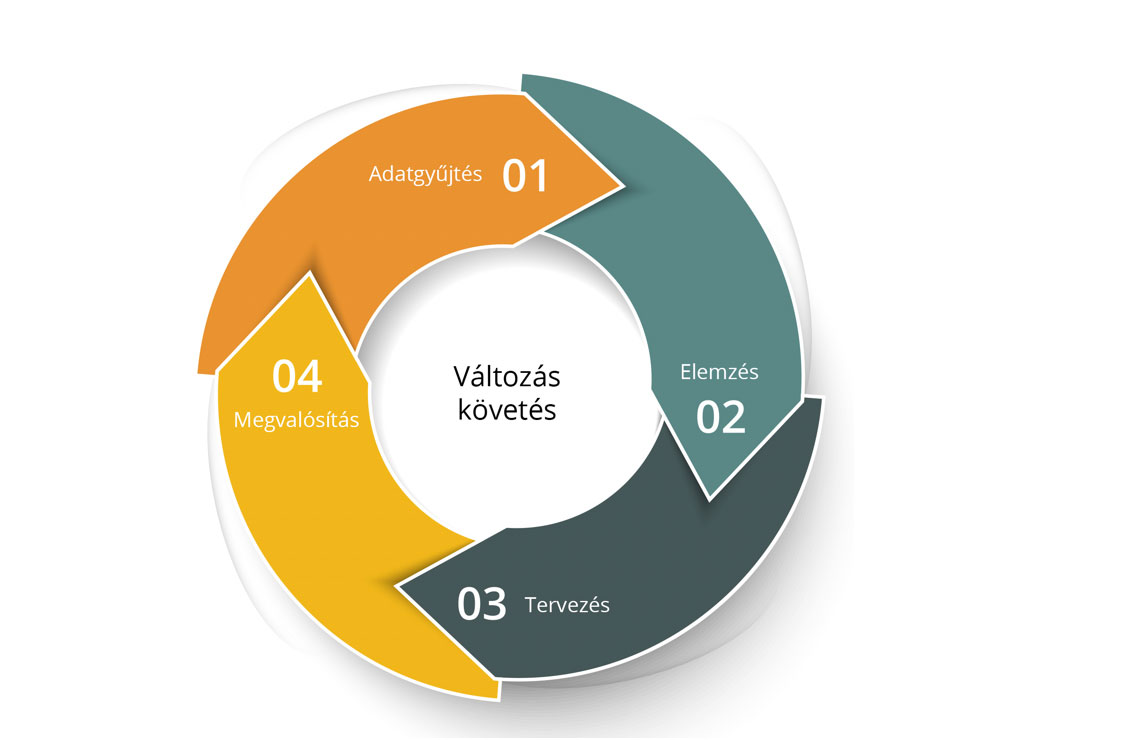
Previously, it was sufficient to deal with the office along with the 5-year cycle of the lease agreements. However, it has now become clear that it is necessary to continuously monitor the utilization of the office and its proper adaptation to rapidly changing circumstances. Office utilization analyses are not only intended to prepare for moving or remodeling, but they are also worth regularly monitoring the success of new offices.
Related reading: